

Arham Law Company
Best Lawyers in Lahore
Best Lawyers in Lahore
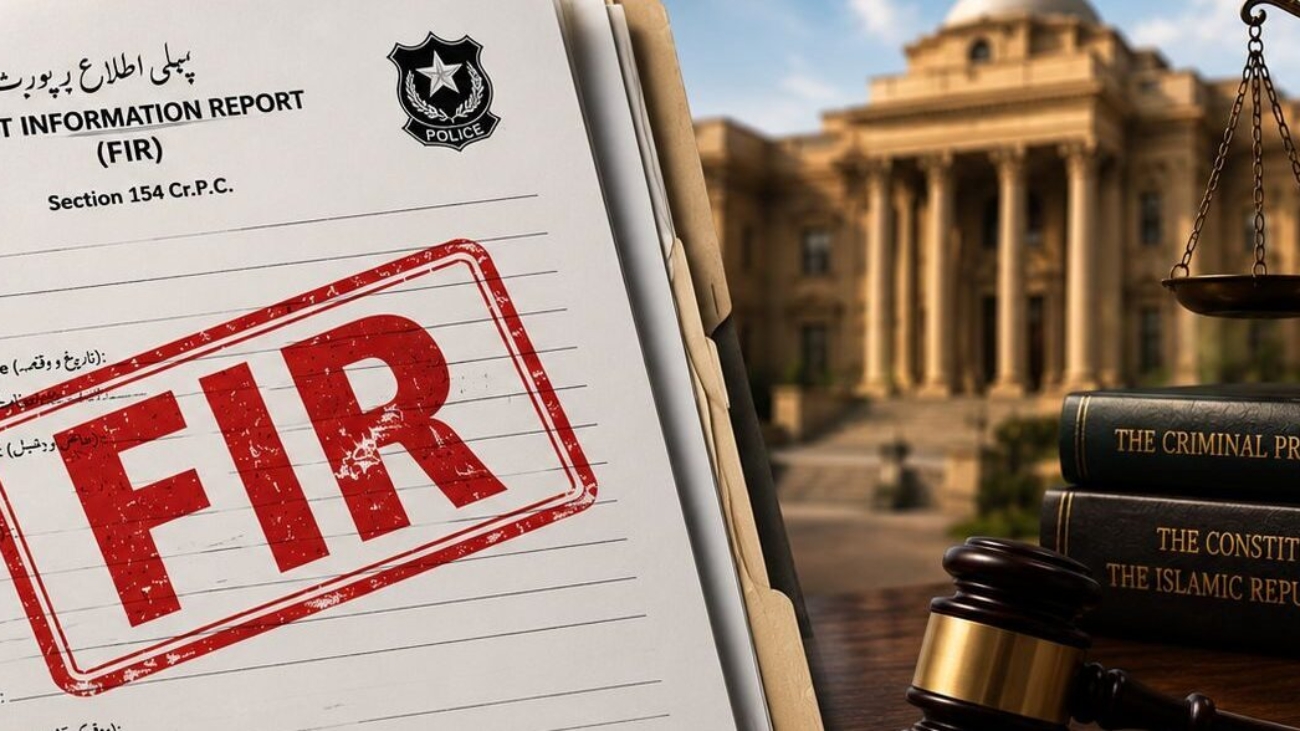
Finding out that a First Information Report (FIR) has been registered against you can be one of the most stressful and paralyzing experiences of your life. In Pakistan, the criminal justice system is unfortunately sometimes weaponized by individuals seeking personal revenge, attempting to extort money, or trying to gain leverage in an ongoing dispute. If you are facing a fabricated criminal charge, the immediate fear of police arrest, social stigma, and the daunting prospect of a prolonged legal battle can feel completely overwhelming.
However, it is crucial to understand that an FIR is merely the initiation of a criminal investigation—it is not a conviction, and it does not mean the end of your personal or professional life. The legal framework provides robust mechanisms to protect innocent citizens from malicious prosecution, unlawful harassment, and the abuse of police powers. Navigating this situation successfully requires specialized intervention from an experienced criminal law expert in Pakistan who understands how to systematically dismantle these charges.
This comprehensive guide will walk you through your fundamental legal rights, the immediate steps you must take to protect your liberty, and the exact procedures for having a baseless FIR quashed. We will also explore how you can turn the tables and hold your accuser legally accountable for their false allegations.
To fight a false FIR, you first need to understand what an FIR actually is and how it functions under the law. The registration of an FIR is strictly governed by Section 154 of the Code of Criminal Procedure (CrPC), 1898.
Under this section of the law, whenever information regarding the commission of a “cognizable offense” (an offense serious enough that the police can arrest a suspect without a warrant, such as theft, fraud, or assault) is given to an officer in charge of a police station, they are required to reduce it to writing. The police are legally obligated to register the FIR if the information discloses a cognizable offense. At this initial stage, they do not have the statutory authority to hold a detailed, pre-emptive inquiry into the absolute truthfulness of the allegations.
While this strict legal obligation is designed to ensure that victims of actual crimes are not turned away by corrupt or lazy police officials, this same provision is frequently exploited by bad actors. Because the police must register the case if the complaint fits the technical definition of a crime, malicious individuals will carefully draft their complaints—often with the help of crooked advisors—to ensure it sounds like a severe criminal offense, even if the underlying issue is entirely non-criminal.
Common scenarios where false FIRs are weaponized include:
Knowing that the system is prone to such systemic abuse, the higher judiciary in Pakistan has established clear legal pathways to neutralize these malicious tactics.
If you discover a false FIR has been lodged against you, your absolute first priority is to secure your physical liberty. Do not attempt to visit the police station alone to “clear your name” or explain your side of the story without legal protection. The police are legally empowered to arrest you the moment you are nominated in a cognizable offense, and they will rarely listen to your explanations without a court order.
Instead, you must immediately apply for bail. There are two primary avenues depending on your location and circumstances:
If you are currently in a different city or province than where the FIR was registered, or if you anticipate immediate arrest by police officers waiting outside your home, your attorney can approach the High Court for Protective Bail. This is a temporary, short-term bail (usually lasting a few days) granted solely to give you safe passage to travel to the relevant trial court to apply for regular pre-arrest bail. The High Court does not judge the merits of the case during a protective bail hearing; it merely ensures you have the opportunity to surrender before the proper forum without being humiliated by a sudden, aggressive arrest.
To avoid arrest altogether, your legal counsel must file an application for Pre-Arrest Bail in the local Court of Sessions. To successfully obtain pre-arrest bail, your lawyer must demonstrate to the judge that:
Securing pre-arrest bail effectively declaws the false FIR. Once the threat of immediate arrest is completely removed, you can fight the allegations on your own terms without the psychological pressure of being behind bars.
Once your physical liberty is securely protected, the next strategic move is to attack the root of the problem: the FIR itself. You do not have to wait years for a grueling criminal trial to conclude to prove your innocence. If an FIR is fundamentally flawed, baseless, or illegal, you can petition the High Court to “quash” (cancel and invalidate) the FIR and all subsequent legal proceedings.
This extraordinary remedy is found under Section 561-A of the Code of Criminal Procedure (CrPC), which outlines the inherent powers of the High Court. Section 561-A states that nothing in the code shall limit or affect the inherent power of the High Court to make orders necessary to give effect to any order under the Code, to prevent the abuse of the process of any court, or to secure the ends of justice.
The High Court views its inherent jurisdiction as a powerful shield against injustice. It will not quash an FIR simply because you claim you are innocent—that is a matter for a trial court to evaluate based on detailed evidence. However, the High Court will actively exercise its power to quash an FIR in the following scenarios:
It is important to note that the High Court generally prefers that an accused first exhaust their remedies before the trial court under Section 249-A (for Magistrates) or Section 265-K (for Sessions Courts) of the CrPC, which allow a trial judge to acquit an accused at any stage if the charge is groundless. However, if the registration of the FIR itself is a blatant, undeniable abuse of power, the High Court will not force you to endure the humiliation of a trial and will quash the matter directly.
Surviving a false FIR is only half the battle. Once you have successfully cleared your name, you have the right to strike back. The law in Pakistan does not allow malicious individuals to waste state resources and destroy livelihoods with impunity. You can hold your accuser accountable through both criminal and civil avenues.
The most direct statutory weapon against a false accuser is Section 182 of the Pakistan Penal Code (PPC), 1860. This section specifically penalizes anyone who gives false information to a public servant (like a police officer), intending to cause that public servant to use their lawful power to injure or annoy another person.
If the police investigation concludes that the FIR was entirely fabricated (often resulting in the police filing a “Cancellation Report”), the police themselves are mandated to initiate proceedings under Section 182 PPC against the person who filed the false report. The punishment can include imprisonment for up to six months, a fine, or both.
Similarly, Section 211 of the PPC deals with individuals who institute criminal proceedings or falsely charge someone with an offense knowing there is no just or lawful ground for such a charge. If the false charge relates to a severe crime punishable by death or life imprisonment, the false accuser can face up to seven years in prison.
Beyond criminal penalties, you can demand financial compensation. Once the false FIR is quashed or you are formally acquitted, you can file a civil lawsuit for “Malicious Prosecution.” In this suit, you can demand heavy financial damages for the mental agony, social humiliation, legal fees, and any loss of business or employment you suffered due to their fabricated charges.
Additionally, if the accuser publicly spread the false allegations to ruin your reputation in your community, family circle, or industry, you can file a separate civil suit for Defamation under the Defamation Ordinance, 2002.
When faced with a false FIR, your behavior in the first 48 hours dictates the trajectory of the entire case. To protect yourself, strictly adhere to these guidelines:
A false FIR is a daunting weapon, but it is one that can be systematically dismantled with a cool head and aggressive, strategic legal representation. The law in Pakistan explicitly recognizes the prevalence of malicious prosecution and provides powerful tools—like pre-arrest bail and High Court quashment under Section 561-A—to protect innocent citizens.
If you or a loved one find yourselves targeted by a baseless criminal charge, time is of the essence. Prioritize your physical liberty, secure specialized criminal litigation defense services immediately, and remember that the burden of proving these fabricated allegations ultimately rests entirely on the accuser. By navigating the system intelligently, you can not only clear your name but also ensure that those who attempt to abuse the law face severe consequences for their actions.